
8 Practices for Healing Mother Wounds
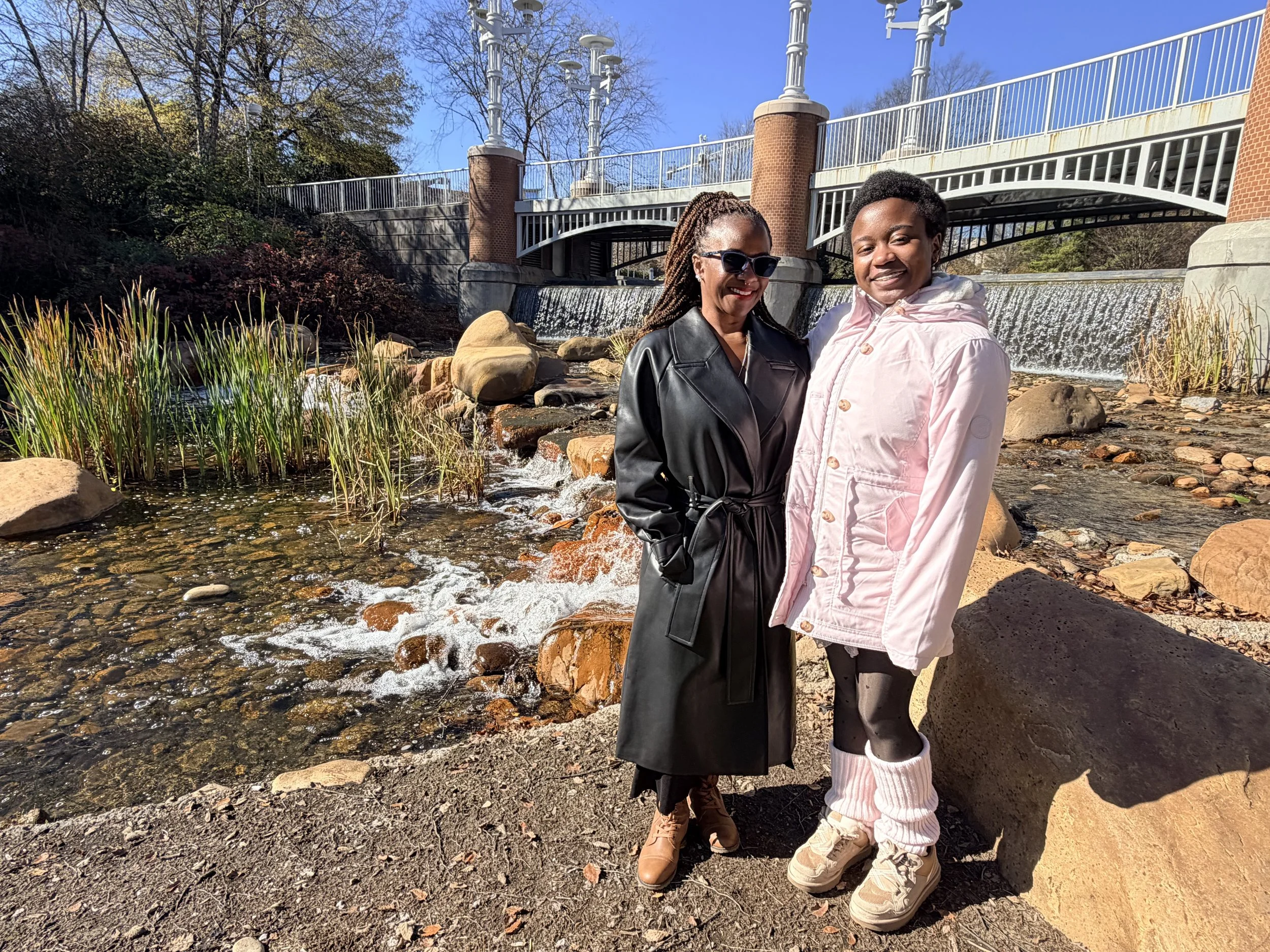
The Mother You Needed vs. The Mother You Had: Breaking the Cycle of Inherited Pain
There's a particular kind of grief that comes with acknowledging your mother wound. It's not just grieving what she did or didn't do—it's grieving the mother you needed and never had.
For me, this grief was complicated by the fact that my mother had a direct hand in my childhood abuse. She knew. She could have protected me. She chose not to.
Instead, she saw me as a resource. A meal ticket. Someone who existed to provide for her financially, emotionally, energetically—while she never truly saw me as a whole person with needs of my own.
I enabled this dynamic for decades. I worked multiple jobs to support her. I prioritized her comfort over my own well-being. I told myself this was what good daughters do, what family requires, what love looks like.
And in the process, I taught my daughter Rose that this is what women do—we sacrifice ourselves for mothers who don't see us, we give to people who only take, we override our own needs to keep the peace.
The mother wound isn't just about what our mothers did to us. It's about what we do to ourselves and our daughters when we don't heal it.
The work of healing mother wounds is among the most painful we can do. Because it requires us to see our mothers clearly—not as the idealized figures we wish they were, not as the villains we might want to make them, but as flawed, wounded women who did the best they could with what they had, even when their best caused us harm.
My mother is deceased now. She's in the land of the ancestors. And even in death, the work of healing what happened between us continues.
Because mother wounds don't die with our mothers. They live in our bodies, in our relationships, in how we mother ourselves and our children. They show up in our inability to receive care, our compulsion to over-give, and our belief that we have to earn love through service.
Healing the mother wound doesn't mean excusing what happened. It means breaking the cycle.
It means recognizing the patterns we inherited—the people-pleasing, the emotional unavailability, the martyrdom, the inability to set boundaries—and choosing differently.
It means giving ourselves what our mothers couldn't: unconditional love, protection, permission to have needs, and the safety to be imperfect.
And for those of us who are mothers ourselves, it means being brave enough to break the pattern with our own children—to apologize when we get it wrong, to show up differently than our mothers showed up for us, to heal alongside our daughters instead of passing the wound forward.
This is the work Rose and I are doing together. Healing the ways I failed her when I was too depleted, too traumatized, too consumed by survival to be the mother she needed. Breaking the cycle that's been passed down through our maternal line for generations.
The mother wound isn't healed by pretending it doesn't exist. It's healed by feeling it fully, grieving what we lost, and consciously choosing to mother ourselves and our children differently.
My Soft Living Codes for Healing Mother Wounds
My Soft Living Codes became: I Break the Cycle Here, I Can Love Her and Still Set Boundaries, I Give Myself What She Couldn't Give Me, My Daughter Deserves a Healed Mother, and I Am Not Responsible for Fixing Her.
These codes guide me when guilt says I should have done more for my mother, when the pattern tries to repeat itself with other relationships, when I catch myself mothering Rose the way my mother mothered me.
This is core work in The Soft Hearts Society™—healing mother wounds so we can break generational cycles and mother ourselves with the tenderness we never received.
"The mother wound isn't just about what our mothers did to us. It's about what we do to ourselves and our daughters when we don't heal it."

8 Soft Practices for Healing Mother Wounds
1. Name What You Needed and Didn't Get
Before you can heal the mother wound, you have to acknowledge what's actually wounded.
Complete these sentences:
I needed my mother to protect me, and instead she...
I needed my mother to see me, and instead she...
I needed my mother to validate my feelings, and instead she...
I needed my mother to set boundaries, and instead she...
Don't minimize. Don't make excuses. Just name the truth.
What I needed: Protection from abuse. To be seen as more than a provider. Emotional safety. A mother who chose me over her own comfort.
What I got: A woman who allowed my abuse, who used me financially, who was emotionally unavailable, who saw me as an extension of herself rather than a separate person.
Naming this truth—without justifying it, without cushioning it—was the first step toward healing.
In Module 4 (Honoring the Feminine Lineage), we do this work together. We create space to name what we needed and didn't receive, honoring both the grief and the truth.
Through weekly live calls, we witness each other's mother wounds without trying to fix them or minimize them. We simply hold space for the truth.
Journal prompt: What did you need from your mother that you didn't get? Write it down without censoring.
2. Grieve the Mother You Didn't Have
There's a specific grief that comes with accepting your mother couldn't be who you needed her to be.
This isn't about forgiving her yet. This is about acknowledging the loss.
Set aside sacred time to grieve:
Light a candle for the mother you needed
Write a letter to the mother you wish you'd had
Cry for the child who wasn't protected, seen, or loved the way she deserved
Hold space for the anger, the sadness, the longing
This grief is holy. It's how we metabolize the loss so it doesn't stay stuck in our bodies.
I had to grieve the mother who could have stopped my abuse and didn't. I had to grieve the maternal love I never received. I had to grieve the years I spent trying to earn something she was never capable of giving.
In Module 7 (Forgiving and Releasing Ancestors' Burdens), we create ritual space for this grief. But we don't rush to forgiveness. We honor the grief first.
Through sound healing, drumming, and guided meditation, we allow the grief to move through us without trying to fix it or transcend it prematurely.
This month: Set aside 30 minutes. Light a candle. Grieve the mother you didn't have. Let yourself feel it fully.
3. Understand Her Wounding Without Excusing Her Harm
Your mother was wounded, too. She carried her own trauma, her own mother wounds, her own unhealed pain.
Understanding this doesn't excuse what she did. But it helps you see that her inability to mother you well wasn't about your unworthiness—it was about her limitations.
Ask yourself:
What wounds was my mother carrying?
What did she inherit from her mother?
What survival strategies was she using?
What was she incapable of giving me?
My mother was wounded by her own childhood, by her own mother's failings, by systemic oppression. Understanding this helped me see that her narcissism, her emotional unavailability, her choice to enable my abuse—these weren't about me. They were about her profound wounding.
This understanding doesn't make what happened okay. But it helps me hold both truths: she harmed me, and she was harmed.
In Module 1 (Understanding Ancestral Patterns), we trace mother wounds back through generations. We see how our mothers inherited their patterns from their mothers, who inherited them from their mothers.
This ancestral perspective helps us see that breaking the cycle is not just personal healing—it's generational liberation.
Journal prompt: What wounds was your mother carrying? How might those wounds have shaped her inability to mother you well?
4. Set Boundaries with Living Mothers (or Their Memory)
Whether your mother is alive or deceased, you can still set boundaries.

With living mothers:
Limit contact if interactions are harmful.
Stop providing financial support if it's one-sided.
End conversations that cross your boundaries
Refuse to engage in toxic patterns.
Say no to family obligations that harm you.
With deceased mothers:
Set energetic boundaries through ritual.
Refuse to carry guilt about what you "should have" done.
Release the obligation to maintain a false narrative about who she was
Stop letting her voice dictate your choices.
I had to set hard boundaries with my mother while she was alive—stopping the financial support, limiting contact, and refusing to engage in her manipulation. After her death, I've had to set energetic boundaries—refusing to carry guilt, releasing the obligation to pretend she was someone she wasn't.
In our Soft Life Boundary Setting work (Month 6), we specifically practice mother boundaries. We learn:
How to set boundaries without guilt
Scripts for difficult conversations
What to do when mothers don't respect boundaries
How to maintain boundaries even when you're grieving
This week: Identify one boundary you need with your mother (or her memory). What is it? How will you establish it?
5. Stop Repeating Her Patterns
The mother wound perpetuates when we unconsciously repeat what she did.
Notice where you're repeating her patterns:
Are you emotionally unavailable the way she was?
Do you over-function and martyr yourself like she did?
Are you critical and withholding like she was?
Do you struggle to apologize the way she couldn't?
Are you teaching your children that love requires sacrifice, the way she taught you?
This awareness is painful. When I realized I was repeating my mother's pattern—being physically present but emotionally absent with Rose—it broke something open in me.
But that awareness created the possibility for change.
In the Soft Hearts Society, we work with breaking inherited patterns through:
Shadow work that helps us see where we're unconsciously repeating what was done to us
Mother-daughter healing practices that Rose and I share
Conscious parenting tools for doing it differently
Journal prompt: Where are you repeating your mother's patterns? How can you choose differently?
6. Re-Mother Yourself
Healing the mother wound means learning to give yourself what your mother couldn't.
Practice self-mothering:
Protect yourself the way she should have protected you.
Validate your feelings the way she should have validated them.
Set boundaries the way she should have modeled them.
Be gentle with yourself, the way she should have been gentle.
Celebrate yourself the way she should have celebrated you.
This is the most tender work. Learning to mother yourself when you never learned what good mothering looks like.
I had to learn to comfort myself, to speak kindly to myself, to protect my own energy, to validate my own experiences—all the things my mother never did.
In the Soft Hearts Society™, we practice self-mothering through:
Self-Reiki practices where you channel maternal healing energy toward yourself
Inner child work where you mother the younger parts of yourself
Affirmation practices that re-parent your inner dialogue
This week: Notice when you need comfort, validation, or protection. Give it to yourself. Mother yourself the way you needed to be mothered.
7. Heal Alongside Your Children (If You're a Mother)

If you're a mother, healing your mother wound isn't just about you—it's about breaking the cycle for your children.
This requires:
Acknowledging where you've failed them
Apologizing when you get it wrong
Showing them a mother who can be vulnerable, imperfect, and still loving
Breaking the patterns you inherited before you pass them forward
The most important healing work I've done is with Rose. Apologizing for the years I was emotionally absent. Acknowledging how my burnout hurt her. Showing her that mothers can be imperfect and still worthy of love.
We're healing together—not me healing first and then mothering her from a healed place, but both of us doing the messy work simultaneously.
In our Mother-Daughter Healing courses (part of the curriculum), Rose and I share:
How we've navigated my failures as a mother
How we're breaking generational patterns together
What healing alongside each other actually looks like
If you're a mother: Is there something you need to acknowledge or apologize for? Can you be brave enough to heal alongside your child?
8. Forgive When You're Ready (Not Before)
Forgiveness isn't required for healing. And it's definitely not the first step.
You can heal the mother wound without forgiving your mother.
But if and when forgiveness does come, it won't be because you forced it or spiritually bypassed your anger. It will come naturally, as a byproduct of your own healing.
Forgiveness doesn't mean:
What she did was okay.
You have to reconcile
You stop setting boundaries.
You pretend it didn't happen.
Forgiveness means:
You're no longer carrying the poison of resentment.
You've released her from the obligation to be someone she can't be
You've freed yourself from needing her to change for you to be whole.
I haven't fully forgiven my mother yet. And that's okay. I've released some of the resentment. I understand her wounding. But full forgiveness? That may come, or it may not. My healing doesn't depend on it.
In Module 7 (Forgiving and Releasing Ancestors' Burdens), we work with forgiveness—but only after we've honored the anger, grief, and truth. We never rush to forgiveness. We let it come in its own time.
Remember: You don't owe your mother forgiveness. Forgive if and when you're ready, not because someone tells you it's required for healing.
Ways to Continue This Work with Me
A sacred space for women to heal mother wounds and break generational cycles.
Inside, you receive:
10-month Ancestral Healing curriculum specifically addressing mother wounds and generational patterns
Mother-daughter healing perspectives from both Allonia and Rose
Weekly livestreams where we process mother wounds together
Ritual practices for grief, boundary-setting, and forgiveness (when ready)
Inner child work and self-mothering practices
A community of women who understand the complexity of loving and grieving mothers who harmed us
Investment: Monthly ($555) Join the Society™
Free Resources
→ Join me on Insight Timer for free circles every Sunday at 10 am CST
→ Subscribe to YouTube for mother wound healing teachings
→ Follow on Pinterest for daily healing reminders
Remember: The mother wound isn't healed by pretending it doesn't exist. It's healed by feeling it fully, grieving what you lost, and consciously choosing to mother yourself and your children differently. You break the cycle here.
