8 Soft Practices for Working with Sacred Anger
Sacred Rage and Soft Living: How Anger Can Lead You Home
Let's talk about something most spiritual spaces won't touch: your anger.
Not the kind of anger that's safe to express—the righteous indignation at injustice far away from your own life. I mean the raw, messy anger you carry about what happened to you. About the people who should have protected you and didn't. About all the years you gave yourself away. About the abuse you endured, the boundaries that were violated, the times you said yes when every cell in your body was screaming no.
I carried rage for decades without even knowing it. Rage at my mother, who had a direct hand in my abuse and chose not to protect me. Rage at my ex-husband, whose violence damaged my body in ways I still carry. Rage at myself for all the years I played small, people-pleasing, and provided for everyone while depleting myself completely.
In most spiritual communities, we're taught to transcend anger, to forgive, to let go. We're sold a version of healing that skips right over the hard parts and lands in some soft-filtered Instagram version of peace. But that's not how healing actually works. That's not how we find our way back home to ourselves.

Your anger is information. It's your system's way of telling you that something wasn't okay, that boundaries were crossed, that you matter. When we've been taught our entire lives to be nice, not to make waves, to accommodate everyone else's comfort at the expense of our own, our anger is the truth-teller we've been silencing.
I've had to do deep work to even access my anger. I used plant medicine, hypnosis, and past life regression—all to help me remember what my mind had buried as protection. My childhood abuse was so painful that my psyche literally couldn't hold it. But my body remembered. And my anger, once I could finally feel it, became the key to my liberation.
Here's what they don't tell you about soft living: it requires fierce boundaries. You cannot build a soft life while still allowing people to treat you harshly. You cannot rest deeply while still carrying everyone else's burdens. You cannot come home to yourself while still abandoning your needs for everyone else's comfort.
Soft living isn't about being passive. It's about being sovereign.
And sovereignty requires you to feel your anger, to honor what it's telling you, to let it burn away the parts of your life that were never meant for you. It means looking at the relationships where you've been the eternal giver and asking: Is this reciprocal? It means examining the patterns where you've equated love with sacrifice and asking: Who taught me this, and is it true?
For me, this meant confronting hard truths about my relationship with my mother, who is now deceased. It meant acknowledging that I enabled her narcissism by providing for her financially while she never truly saw me. It meant recognizing that my strained relationship with my sister follows the same pattern—me as the eternal caretaker, never quite receiving what I give.
Your anger doesn't make you less spiritual. It makes you honest. And from that honesty, from that willingness to acknowledge what wasn't okay, you can finally begin to build a life that is.
The women in our circles aren't here to bypass their pain with toxic positivity. We're here to feel it all—the rage, the grief, the exhaustion, the confusion—and to discover that on the other side of feeling it, we find ourselves. Not the selves we were conditioned to be, but the women we actually are.
Your softness doesn't erase your anger. Your anger clears the path for your softness to finally exist.
Feel it. Honor it. Let it show you where you need boundaries, where you need to withdraw your energy, and where you need to choose yourself, finally.
That's the medicine.
My Soft Living Codes for Honoring Sacred Anger
When I finally allowed myself to feel my anger—not bypass it, not spiritually transcend it, but actually feel it—I had to create new codes to hold this truth.

My Soft Living Codes became: Anger Is Information, Boundaries Are Sacred, I Honor All My Feelings, My Truth Matters More Than Keeping the Peace, and Softness Requires Fierceness.
These codes remind me that I don't have to be nice to everyone who hurt me. I don't have to forgive before I'm ready. I don't have to make my healing palatable for people who benefited from my silence.
This is the work we do in The Soft Hearts Society™. We don't bypass anger with premature forgiveness. We honor it as sacred information, as the voice that's been trying to protect us all along.
"Your anger is not the problem. Your anger is the teacher showing you where your boundaries need to be."
8 Soft Practices for Working with Sacred Anger
1. Give Your Anger a Voice on Paper
Set a timer for 20 minutes and write uncensored rage letters that you will never send. Write to the people who hurt you, the systems that failed you, the parts of yourself that kept choosing depletion.
Use whatever language comes—profanity, repetition, raw truth. Don't edit or make it pretty. This isn't about fairness or balance. This is about letting the anger move through you instead of staying trapped inside.
When you're done, you can burn the pages, tear them up, or keep them—whatever feels right.
This practice saved me. I wrote rage letters to my mother, to my ex-husband, to the family members who expected me to provide for them while never seeing my struggle. I wrote to myself for all the years I abandoned my own needs.
The act of writing without censoring, without making myself "sound spiritual" or "healed," finally allowed the anger to have a voice. And once it had a voice, it could move.
In the Soft Hearts Society™, we work with anger through journal prompts designed explicitly for rage work. In Module 7 (Forgiving and Releasing Ancestors' Burdens), we write forgiveness letters—but NOT before we've written our rage letters. You cannot genuinely forgive what you haven't first allowed yourself to be angry about.
During our monthly ritual work, we create safe ceremonies to burn these letters, releasing the anger while honoring what they taught us.
This week: Set a timer for 20 minutes. Write a rage letter to someone who hurt you. Don't hold back. When you're done, decide what to do with it—burn it, bury it, or keep it as a witness to your truth.
2. Move the Anger Through Your Body
Anger that stays stuck in your body becomes inflammation, tension, and illness. Find physical ways to release it:
Punch pillows
Stomp your feet
Shake your whole body
Scream into a pillow or in your car
Rip up cardboard boxes
Squeeze ice cubes until they melt
Your body needs to discharge the activation that anger creates. Movement is medicine.
I learned this the hard way. When I was bedridden, unable to move, my anger had nowhere to go. It turned inward, creating more inflammation, more pain, more illness. When I finally started moving again, I had to learn to move my anger, too.
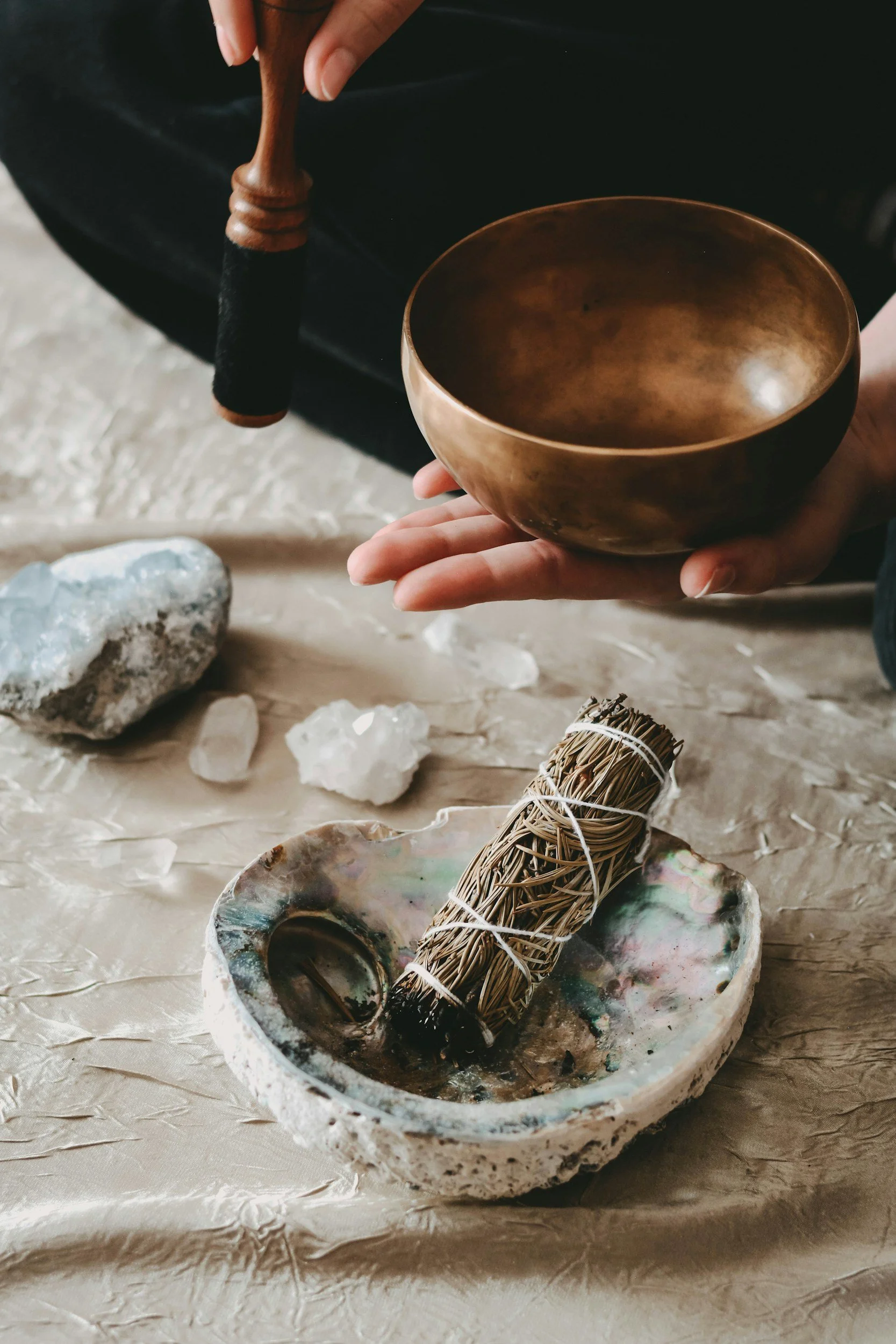
Drumming became one of my primary anger-release practices. The repetitive beating of the drum, the vibration through my body, the primal rhythm—it allowed my anger to move without words, without explanation, without needing to make sense of it.
In the Soft Hearts Society™, we work with anger somatically through:
Trauma-informed yoga flows are explicitly designed to release stored rage.
Breathwork practices that activate and release anger safely
Drumming and rattling sessions where we let our bodies express what words cannot
Shaking practices to literally vibrate anger out of the nervous system
In Module 5 (Reiki for Ancestral Healing) and Module 8 (Reclaiming Power through Guided Drum Journey), we learn that healing isn't just cognitive—it's embodied. Your anger lives in your tissues. You have to move it out.
Practice this week: Find a private space. Set a timer for 5 minutes. Move your anger—shake, stomp, punch a pillow, whatever your body wants to do. Don't think. Just move.
3. Name What You're Actually Angry About
Often, we're angry about surface things when deeper wounds are underneath.
Complete this prompt: "I'm angry about [situation], but what I'm really angry about is..." Keep going deeper. "And underneath that, what I'm really angry about is..."
Do this until you reach the core wound.
Example: "I'm angry my sister asked me for money again, but what I'm really angry about is that she never sees how much I sacrifice. And underneath that, what I'm really angry about is that I learned my worth was tied to what I could provide, and I'm tired of proving I matter by depleting myself."
This practice changed everything for me. I thought I was angry at my mother for not protecting me. But underneath that, I was angry at myself for staying in relationships where I recreated that same dynamic. And underneath that, I was angry at a world that taught me my value was in my usefulness, not my existence.
In Module 1 (Understanding Ancestral Patterns), we trace our anger back to its roots. We explore how the things that make us angry now are often connected to much older wounds—childhood experiences, family patterns, generational trauma.
Through weekly live calls, we practice this layering together. We witness each other's anger and the more profound truths it's pointing to. This shared exploration makes it safe to go deeper than we'd ever go alone.
Journal prompt: What am I angry about right now? What's underneath that? And underneath that? Keep going until you hit the core truth.
4. Create Anger-Informed Boundaries

Your anger is showing you where your boundaries need to be.
When you feel anger rising in a relationship or situation, pause and ask:
What boundary is being violated right now?
What do I need to say no to?
What needs to change?
Then act on it. Use your anger as fuel to finally establish the boundaries you've been avoiding.
Start with one: "I will no longer..." or "I am no longer available for..."
My anger showed me:
I will no longer financially support family members who don't reciprocate
I am no longer available for managing other people's emotions
I will no longer sacrifice my health to accommodate others' comfort
I am no longer staying in relationships where I give far more than I receive
These anger-informed boundaries weren't easy to set. They disappointed people. They ended some relationships. But they also saved my life.
In our Soft Life Boundary Setting course (delivered in Month 6), we learn that boundaries aren't mean—they're necessary. We practice:
Boundary scripts for common situations
Role-playing during live calls so you can practice saying no
Somatic grounding so your body feels safe, setting boundaries
Ritual work for releasing the guilt that comes with choosing yourself
This week: Identify one anger-informed boundary you need to set. Write it down: "I will no longer..." or "I am no longer available for..." Then take one action to establish it.
5. Reclaim Your Energy from Old Resentments
Resentment is anger that's been swallowed and stored.
Make a list of everyone you resent and what you resent them for. For each one, ask: "Where am I still giving my energy to this person or situation?"
You might be giving energy through:
Rumination (thinking about them constantly)
Still trying to prove yourself to them
Hoping they'll change or apologize
Financial support
Staying in contact when it depletes you
Choose one place to withdraw your energy. This isn't about confrontation—it's about redirecting your life force back toward yourself.
I had massive resentment toward my mother (for the abuse and abandonment), my ex-husband (for the violence), my sister (for taking without giving), and myself (for allowing it all).
The work wasn't about confronting them. Most of them wouldn't hear me anyway, and my mother is deceased. The work was about energetically withdrawing—stopping the mental loops, stopping the financial support, stopping the hope that they'd change, stopping the self-blame.
In Module 7 (Forgiving and Releasing Ancestors' Burdens) and Module 3 (Meditation for Ancestral Connection and Healing), we work with energy reclamation through:
Guided meditations where you visualize calling your energy back from everyone you've given it to
Reiki practices for cutting energetic cords that bind you to resentment
Ritual work for releasing old grudges while honoring the information they carried
This month: List 3 people or situations you resent. For each, identify where you're still giving energy. Choose one place to withdraw your energy this week.
6. Distinguish Between Old Anger and Present Anger
Sometimes, current situations activate old wounds, and the intensity of our reaction is actually about the past, not the present.
When you feel anger arise, pause and ask: "How old do I feel right now?"
If you feel young—like a child or teenager—the anger is likely connected to an old wound. This doesn't mean the current situation is okay, but it helps you understand the depth of your response and address both the past hurt and the present boundary need.
This practice gave me so much clarity. When someone would cross a boundary, I'd feel a rage that seemed disproportionate. But when I asked, "How old do I feel right now?" I'd realize I felt like a terrified 7-year-old, not a grown woman.
That 7-year-old's anger was valid—she wasn't protected, her boundaries were violated, and she had no power. But I'm not seven anymore. I can protect myself now. Understanding this distinction allowed me to address both the childhood wound AND the present boundary violation.
In our Inner Child Healing work (part of our curriculum), we learn to differentiate between the child's anger and the adult's anger. We practice:
Guided meditations to meet and comfort our angry inner child
Somatic practices to ground ourselves in our adult body when old wounds activate
Journal work where the child writes her rage and the adult responds with protection
Through past-life regression (offered monthly in the membership), we sometimes discover that our anger reaches even further back—into ancestral wounds or past-life experiences. This deep work helps us release anger that was never ours to carry.
Practice: Next time you feel disproportionate anger, pause. Ask: "How old do I feel right now?" If you feel young, comfort that younger part before responding to the current situation.
7. Practice Angry Self-Compassion
We often turn our anger inward, becoming rageful at ourselves for all the years we didn't set boundaries, didn't leave toxic situations, didn't protect ourselves.
This self-directed anger keeps us stuck.
Instead, practice fierce self-compassion:
"I did the best I could with what I knew then. I survived. And now I'm learning differently. The woman I was then deserves my compassion, not my rage."
Place your hand on your heart when you say this. Let it soften the edges of self-blame.
I spent years furious at myself for staying in an abusive marriage, for enabling my mother's narcissism, for working myself into collapse. "Why didn't I leave sooner? Why didn't I see it? Why was I so stupid?"
But that anger at myself was just another way of abandoning myself. The woman who stayed in those situations was doing her best to survive with the tools she had. She deserves my love, not my rage.
In Module 2 (Releasing Family Guilt and Shame), we work specifically with self-directed anger. We learn that shame is anger turned inward, and we practice redirecting it outward—toward the systems, people, and circumstances that actually harmed us.
Through Reiki self-healing practices, we learn to send compassion to the parts of ourselves we've been angry at. We practice:
Self-forgiveness meditations
Affirmations for self-compassion
Ritual work for releasing self-blame
This week: Notice when you're angry at yourself. Place your hand on your heart. Say: "I did the best I could. I survived. I deserve my own compassion."
8. Channel Anger into Aligned Action
Once you've felt the anger and let it move through you, ask:
"What does this anger want me to do?"
"What change does it want me to make?"
Anger is activating energy—it's meant to mobilize us toward necessary change.
Maybe it's:
Finally ending a draining relationship
Leaving a job that doesn't honor you
Speaking a truth you've been holding back
Redirecting your resources toward yourself
Creating something new from the ashes of what burned down
Let your anger guide you toward the life that's actually yours, not the one you've been conditioned to live.
My anger became the fuel for creating the Soft Hearts Society™. I was angry that there were no spaces for women to be real, messy, angry, and still spiritual. I was angry that soft living was being sold as passive acceptance instead of fierce sovereignty. I was angry that women were being told to forgive before they'd been allowed to rage.
That anger didn't make me bitter. It made me build something different.
In Module 10 (Setting Intentions for Future Generations), we work with anger as a catalyst for creating the legacy we want to leave. We ask:
What does my anger want me to change in my life?
What does it want me to create?
How can I channel this energy toward building something new?
Through vision work and ritual, we transform our anger from a wound into a weapon—not to hurt others, but to cut through what's keeping us stuck and carve out space for what we actually want.
This month: Ask your anger: "What do you want me to do?" Then take one aligned action based on its answer.
Ways to Continue This Work with Me
If these words resonated with you—if you found yourself nodding, crying, or feeling that deep recognition of "this is my story too"—I want you to know you don't have to walk this healing path alone.
A sacred membership community where women gather to honor their anger, feel their rage, and discover that softness requires fierceness.
Inside, you receive:
Weekly livestreams with me and my daughter Rose—where anger is welcome, not spiritually bypassed
10-month Ancestral Healing curriculum that helps you understand where your anger comes from and what it's trying to protect
Rage work practices—journal prompts, ritual, and safe spaces to express what you've been holding
Monthly Reiki transmissions to release stored anger from your body
Drumming, rattling, and sound healing to move anger somatically
Trauma-informed yoga and breathwork designed for rage release
Boundary-setting tools fueled by your anger's wisdom
A community of women who understand that anger is sacred, not shameful
Investment:
Monthly: $555
This isn't another spiritual space that asks you to transcend your anger before you've felt it. This is where your rage is honored as the teacher it is.
Free Resources to Begin
→ Join me on Insight Timer for free live women's circles every Sunday at 10 am CST
→ Subscribe to my YouTube channel for teachings on sacred anger and fierce boundaries
→ Follow on Pinterest for daily reminders that your anger is information
Remember: Your anger doesn't make you less spiritual. It makes you honest.
Your softness doesn't erase your anger. Your anger clears the path for your softness to finally have space to exist.
Feel it. Honor it. Let it lead you home.