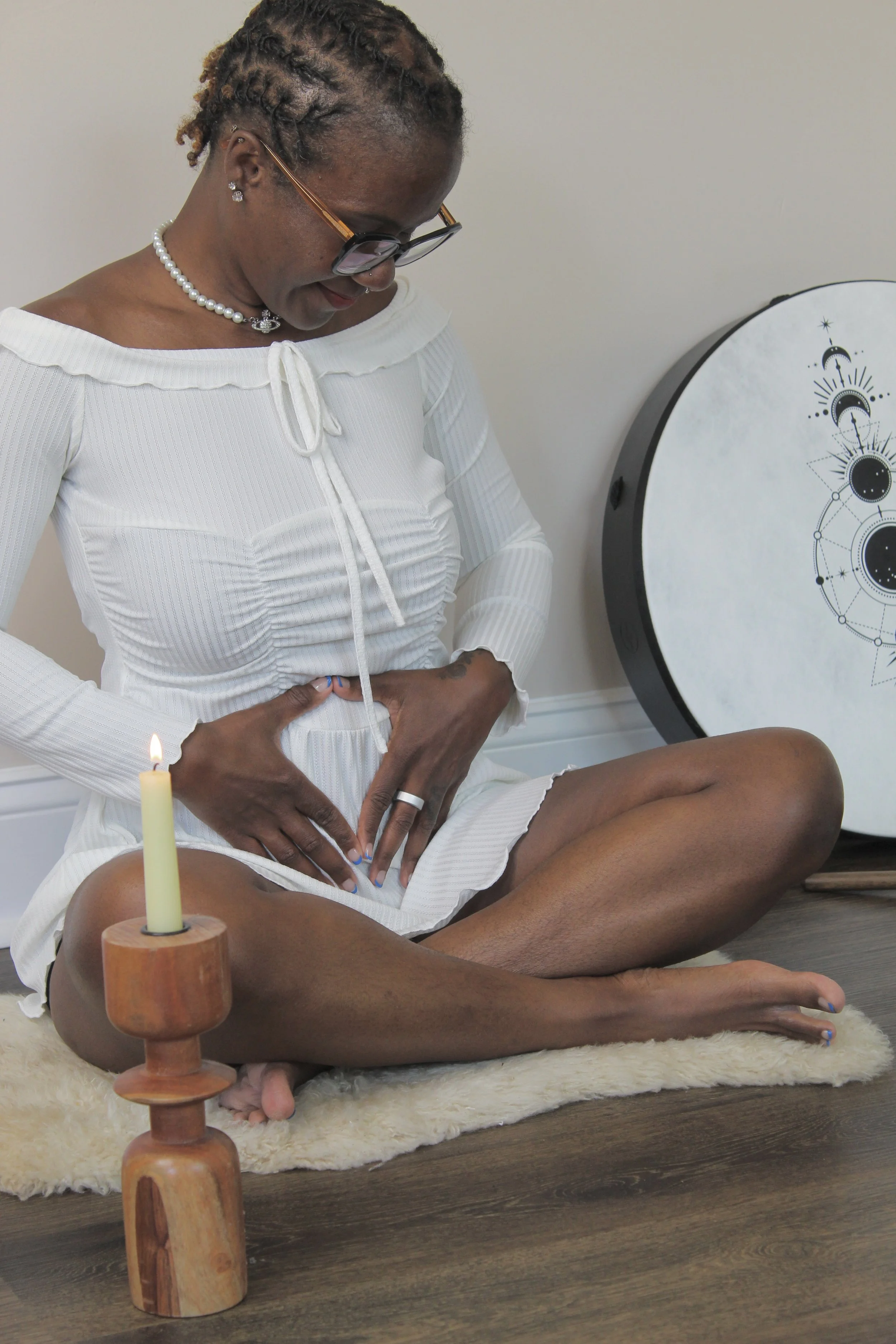
The Altar That Saved My Life (And How You Can Create One Too)
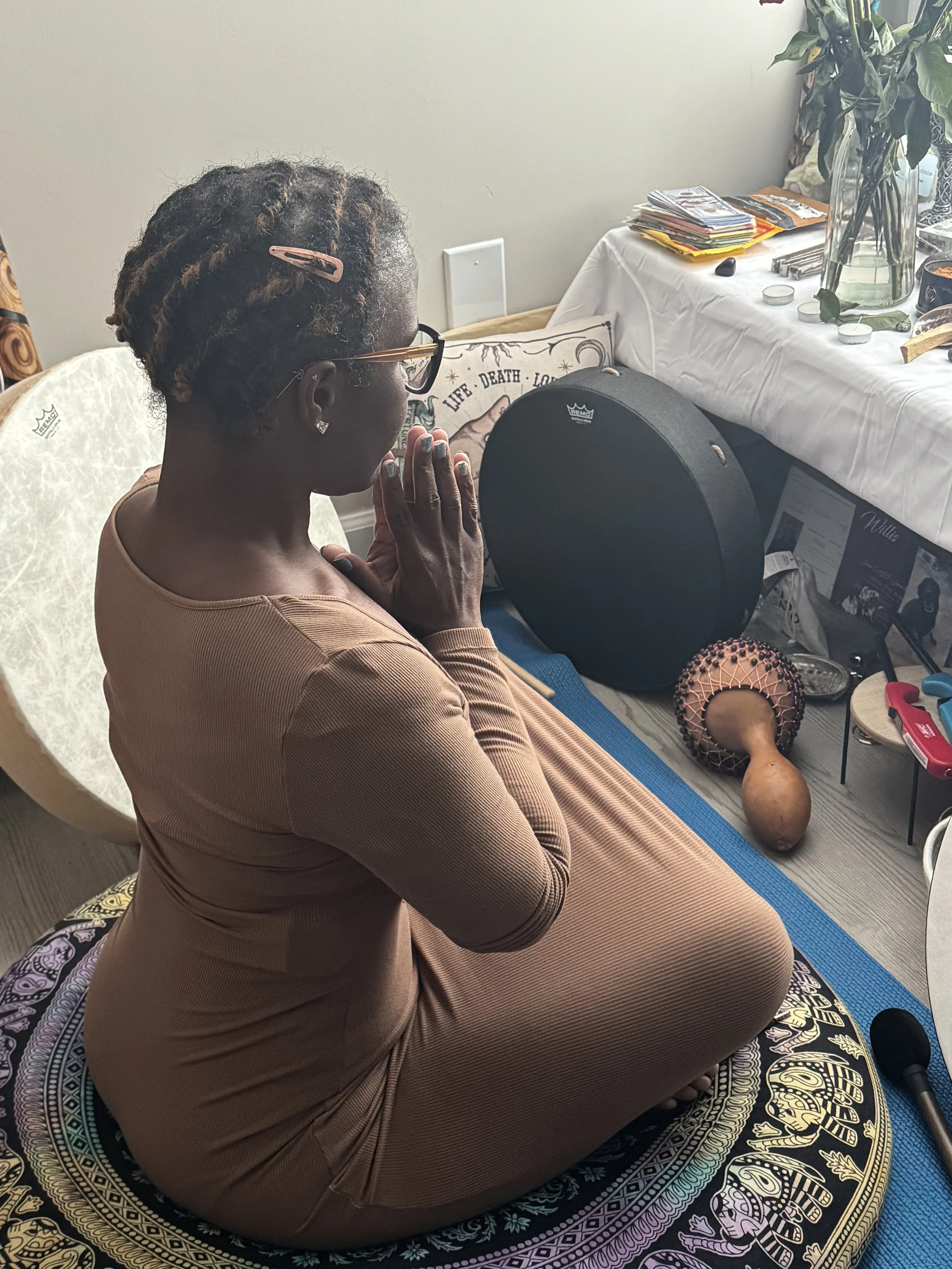
What happens when you finally create a sacred space for yourself
I built my first altar on my nightstand thirteen years ago, while I was battling anxiety.
One candle. One cup of water. One photo of my ancestors.
That was it.
Nothing fancy. Nothing Pinterest-worthy. Just three simple items on a white cloth I'd grabbed from my kitchen drawer.
I didn't know it then, but that altar was about to save my life.
An altar isn't about religion or witchcraft or spirituality credentials.
An altar is simply a physical space dedicated to what's sacred to you.
That's it.
It can be religious or secular. Witchy or not. Elaborate or simple. Public or hidden.
Your altar is YOUR space. There's no wrong way to do it.
What the Altar Gave Me
Over the months of my recovery, my altar practice gave me things therapy and medication couldn't:
🕯️ PRESENCE

In a life where I was always doing, the altar forced me to just be. To sit. To breathe. To exist without purpose or productivity.
🕯️ CONNECTION
To my grandmother. To my ancestors. To something bigger than my pain. I felt held in a way I'd never felt held by the living world.
🕯️ RITUAL
Structure when everything else felt chaotic. No matter how bad the day was, I had this: light candle, pour water, speak, sit, blow out candle. The ritual became an anchor.
🕯️ PERMISSION
Permission to ask for help. Permission to need support. Permission to believe I deserved a sacred space. Permission to take up room.
🕯️ HEALING
Not overnight. Not instantly. But gradually, my nervous system started to settle. The candle flame became a focal point for meditation. The water reminded me I was held. The photo reminded me I came from somewhere.
My altar became the most important healing tool I had.
How My Daughter Started Her Own Practice
Rose watched me with my altar every day for years.
At first, she was skeptical.
But then she started asking questions.
"Who's in the photo?"
"Why do you use water?"
"What do you say to them?"
And then one day, she asked: "Can I make one too?"
She built her altar on a small, blue table shaped like a flower.
And I watched my daughter—who'd been so hurt by my absence during my burnout—start building her own relationship with something sacred.
She started showing up to her altar in the mornings before school. Lighting her candle. Speaking to her ancestors and asking for guidance.
We were healing side by side. Each at our own altar. Each in our own way.
That's when I knew: this practice wasn't just saving my life. It was giving my daughter a tool she'd carry forever.
What You Actually Need to Create an Altar
People think you need a lot to start an altar practice.
You don't.
Here's what I tell everyone:
THE ESSENTIALS (Pick 1-3):
🕯️ ONE CANDLE
Any candle. Birthday candle. Tea light. Jar candle. Even a battery-operated one if you can't burn flame.
Why: Light represents spirit, presence, life force. It signals "I'm here. This is sacred."
💧 ONE CUP OF WATER
Fresh water in any cup, glass, or bowl.
Why: Water is the primary offering to ancestors. It represents life. Change it weekly.
📷 ONE PHOTO
Of an ancestor, loved one who passed, spiritual figure, or anyone whose energy you want present.
Why: Visual connection. Helps you feel their presence.
That's it. Everything else is optional.
You don't need:
An expensive altar table
Crystals from a metaphysical shop
Sage bundles
Specific prayers
To know what you're doing
Just start with one candle, one cup of water, and one photo.
That's enough.
Where to Put Your Altar
Your altar doesn't need a dedicated room or large space.
I've had altars on:
My nightstand
A corner of my dresser
A windowsill
A bookshelf (one shelf dedicated)
The top of a storage box
A tray I could set up and put away
Choose somewhere you'll actually use it. Not somewhere "proper" or "impressive." Somewhere accessible.
What to Do at Your Altar (Simple Daily Practice)
People ask: "Okay, I have an altar. Now what?"
Here's my daily practice (5-10 minutes):
Light the candle
Refresh water if needed
Speak to your ancestors (out loud or silently)
Thank them
Ask for guidance
Tell them about your day
Express grief, anger, joy—whatever's real
Sit for 2-5 minutes in silence
Just breathe
Feel their presence
Listen for any messages or sensations
Estinguish the candle (or leave it burning if safe)
That's it.
No fancy words. No specific prayers. Just you, showing up, building relationship.
What I Say at My Altar
My practice isn't formal. I talk to my ancestors like I'd talk to anyone I love:
"Ancestors, I'm so tired. I've been trying so hard, and it feels like nothing's working. I need to know I'm not alone. Please show me I'm on the right path. Please help me trust the process. Thank you."
Or sometimes just:
"Hi. I'm here. That's all I have today. Just... hi."
There's no script. Just speak from your heart.
The Signs I've Received
Since I started my altar practice, I've received signs that my ancestors are with me:
Feathers appearing in places feathers shouldn't be
Hearing my best friend’s favorite song at the exact moment I needed reassurance
Dreams where deceased loved ones give me specific guidance
Sudden clarity about decisions I was struggling with
Synchronicities (the right person, resource, or opportunity showing up at the perfect time)
Physical sensations (warmth, tingling, feeling like someone's standing behind me—but in a comforting way)
These signs are subtle. Not loud. Not undeniable. But once you start paying attention, you see them everywhere.
What This Has to Do With the Soft Hearts Society™

Altar Work is the foundation of everything we teach in the Soft Hearts Society™.
Our 12-week Altar Work course walks you through:
Week 1: Creating your first altar (even if you have no idea what you're doing)
Week 2: Grounding practices (how to get into your body and out of your head)
Week 3: Consistency and devotion (how to show up daily, even when it's hard)
Week 4: Meeting your ancestors (first contact, building relationship)
Week 5: Offerings (what to give, how to give, why it matters)
Week 6: Listening (how ancestors communicate, how to receive messages)
Week 7: Protection and boundaries (how to work with well ancestors and avoid unwell ones)
Week 8: Healing rituals (using your altar for release, grief, forgiveness)
Week 9: Creativity at the altar (art, writing, music as prayer)
Week 10: Seasonal and cyclical living (aligning with nature's rhythms)
Week 11: Deepening the practice (advanced altar work)
Week 12: Integration (living altar work, not just doing it)
Plus:
Weekly livestreams where I teach live and answer your questions
Monthly guided meditations for ancestral connection
A private community where you can share your altar and get support
Journal prompts, rituals, and resources for every week
This course is what I wish I'd had when I started.
No guessing. No "am I doing this right?" No gatekeeping or spiritual elitism.
Just practical, accessible, trauma-informed guidance for building an altar practice that actually supports your healing.
You Don't Have to Figure This Out Alone
I know how scary it can be to start something new—especially something as vulnerable as building an altar.
You might be thinking:
"I'm not spiritual enough for this"
"What if I do it wrong?"
"What if nothing happens?"
"What if I look silly?"
I felt all of that too.
But here's the truth:
You don't have to be spiritual. You don't have to believe anything specific. You don't have to do it perfectly.
You just have to be willing to try.
And if you try it inside the Soft Hearts Society™, you don't have to try alone.
You'll have:
Me and Rose guiding you every step
A whole course breaking it down week by week
A community of women doing it alongside you
Support when you're confused or stuck
Celebration when you show up and light that first candle
JOIN THE SOFT HEARTS SOCIETY AND START YOUR ALTAR PRACTICE →
What My Life Looks Like Now
Thirteen years after building that first tiny altar on my nightstand, my life looks completely different. During my most recent challenges, my altar has remained my haven, bringing peace and healing at various points in my life. As a result of my practice:
I'm no longer bedridden.
I'm no longer working four jobs.
I'm no longer boundary-less and depleted.
I have energy. I have peace. I have a relationship with my daughter. I have a thriving business built on helping other women heal.
And every single morning, I still show up to my altar.
It's bigger now. More intentional. Photos of multiple ancestors. Seasonal flowers. Offerings of coffee and bread. Crystals and feathers I've collected.
But the practice is the same:
Light the candle.
Pour the water.
Speak to my ancestors.
Listen.
Be held.
That altar saved my life.
And now I want to teach you how to build one that might save yours.
With so much love,
Allonia & Rose
P.S. If you're sitting there thinking, "I want to build an altar, but I don't know where to start," that's exactly why we created the 12-week Altar Work course.
You don't need to know what you're doing. We'll show you. 🕯️