
Trauma, the Energy Body & Restoration

Trauma has never lived in just one place in my body. It has been a shapeshifter — moving through me in different forms depending on the season of my life, the wound being stirred, and how safe I felt in the world at any given moment. There were seasons where I felt completely outside of myself, watching my own life from a distance like it was happening to someone else. A numbness so deep I would not have been able to name it as dissociation then, but I know now that is exactly what it was. My body was protecting me the only way it knew how — by leaving.
There were other seasons where the trauma lived as heaviness. A tightness in my belly and womb that I could not explain, a holding that was older than me. I now understand that the womb carries not only what happened to me, but what happened to the women before me — the violations, the silences, the pregnancies born of violence, the grief never mourned. That heaviness was generational. It was not just mine to carry, but it settled in my body as though it were.
And then there was the hypervigilance. The constant low-grade scanning of every room, every relationship, every shift in someone's tone. Growing up in a home where safety could evaporate in an instant — where a mood could mean a knife or a slap or a door slammed shut on my need for love — my nervous system learned to stay alert. Always. That vigilance kept me alive as a child. As an adult, it has been one of the hardest patterns to unlearn, because the body does not know the danger has passed until you teach it, slowly and with great tenderness, that it has.
The spiritual disconnection was perhaps the most painful of all. I was raised in a tradition of religion used as performance and control — my grandmother's righteousness, my mother's silence around the sacred. My spirit knew there was something deeper, something true, but I had to find my way to it through layers of shame, fear, and inherited mistrust. The path back to myself — through Reiki, through ancestor veneration, through Ifa — has been the path back to spirit. They were never separate.
The Arushaats Most Affected by Personal & Ancestral Trauma
When I sit with my energy body honestly, all five of my primary arushaats carry the fingerprints of trauma — both what was done to me and what was passed down through my lineage. Each center tells a specific story.
Root Arushaat (Muladhara) — Safety, Survival, Belonging
How Trauma Impacted This Center:
The root is the first place trauma lands in a child — because a child's survival depends entirely on the safety of their home. I grew up in a home where safety was never guaranteed. Violence was present. My mother's moods were unpredictable. My body was violated. My basic need for protection was traded for financial survival. The root arushaat holds the body's most primal question: Am I safe? For most of my childhood and young adulthood, the honest answer was no. That wound also runs generationally — my grandmother never felt safe in poverty, under racism, under domestic abuse. My mother never felt safe in that chaotic household. The wound of unsafety traveled through our lineage like a river, and it pooled in my root.
Healing Practices for Restoration:
Grounding practices through trauma-informed yoga — standing poses, earthing, forward folds — have been central to restoring safety in my body. Ancestor veneration creates a felt sense of being held by something larger than myself, which reestablishes the root's foundation. Ifa practice has given me a cosmological home — a sense of belonging to something ancient and intentional — which the root craves deeply.
Sacral Arushaat (Svadhisthana) — Sexuality, Creativity, Pleasure
How Trauma Impacted This Center:
The sacral arushaat — the womb center, the seat of pleasure, creativity, and flow — has been the most directly wounded space in my energy body. I was raped as a child. I became pregnant by my abuser. My womb held violence, shame, and a forced ending before I even understood what any of it meant. I inherited a mother who treated sexuality as dirty, transactional, something to endure rather than inhabit. I inherited a grandmother who survived sexual violence and never spoke of it. The sacral wound in my lineage is old and deep — creativity suppressed, pleasure denied, the feminine body treated as something to be used rather than honored. For a long time, I was disconnected from pleasure entirely. I performed rather than felt. I survived my own body rather than lived in it.
Healing Practices for Restoration:
Womb Reiki has been the most direct and sacred practice for healing this center. Placing intentional energy and presence into the womb space — acknowledging what it has held, releasing what no longer belongs there — has been profoundly transformative. Womb-centered healing work, herbal medicine for the womb, and reclaiming pleasure as a spiritual practice have all been part of restoring this arushaat. I am still in this healing. It is ongoing, layered, and holy.
Solar Plexus Arushaat (Manipura) — Power, Identity, Self-Worth
How Trauma Impacted This Center:
My solar plexus — the seat of personal power and self-worth — was systematically dismantled from childhood. I was told I was fat. I was controlled. I was not allowed to go anywhere, make decisions, or exist as a full self with her own desires and boundaries. My mother's need for control collapsed my sense of agency. I compensated by over-functioning — working four jobs, achieving, performing competence — because if I could not feel powerful from the inside, I would manufacture it through output. That drive kept me from poverty, but it also kept me running. True solar plexus restoration is not about doing more. It is about knowing that my worth exists outside of my productivity.
Healing Practices for Restoration:
Trauma-informed yoga — core work, breath of fire, practices that build internal heat and agency — has helped rebuild this center. Reiki directed at the solar plexus has helped clear the energetic residue of years of external control. The deeper work has been learning, slowly, to stop people-pleasing — to allow my 'no' to be complete without explanation, and to trust that I am enough without proof.

Heart Arushaat (Anahata) — Love, Grief, Trust
How Trauma Impacted This Center:
The heart arushaat holds grief. And I have carried a grief so layered it has taken years to begin to name it all — grief for the child I was who was not protected, grief for the mother I needed and did not have, grief for the mother my mother could not be because of the mother she had, grief for my grandmother who survived so much and healed so little. The heart closes when love is weaponized — when the people who are supposed to love you use you, control you, or simply are not there. I learned early that love was conditional, that emotional availability was dangerous, that opening my heart meant risking devastation. I shut it down. I became emotionally unavailable in my own ways. And I carried the heart wound of an entire lineage of women who loved through survival rather than through wholeness.
Healing Practices for Restoration:
Ancestor veneration has been the most healing practice for my heart — sitting with the grief of my lineage with compassion rather than bitterness. Ifa has given me the spiritual language to understand that love is not what was modeled to me, and that I can choose differently. The most powerful heart healing of all has been the relationship I am building with my daughter — every act of conscious, present, unconditional love I offer her heals something in me as well.
Throat Arushaat (Vishuddha) — Voice, Truth, Speaking Up
How Trauma Impacted This Center:
My throat arushaat carries the wound of silence. I grew up in a family where the truth was dangerous — where keeping secrets was survival, where speaking up about what was being done to you was not an option. My grandmother kept her mouth closed about her dead children, her violated body, her pain. My mother stonewalled rather than spoke. What was modeled to me was that the truth either explodes violently or disappears into silence — there was no middle ground of honest, grounded speech. I learned to lie. I learned to smooth things over. I learned to say what kept the peace rather than what was true. And when I was being abused, I learned that no one was listening anyway. The throat holds all of that unsaid — every truth swallowed, every scream that never left the body, every time I diminished myself to make others comfortable.
Healing Practices for Restoration:
Speaking my truth — in spaces like this, in healing circles, in my practice — has been the primary medicine for this arushaat. Reiki directed at the throat helps release the constriction that lives there. My work as a healer and teacher, giving voice to the lineage wounds I carry and helping others name theirs, is itself a deep throat healing. Chanting in Ifa practice, sound healing, and the simple daily practice of saying what is true rather than what is safe have all been part of restoring this center.
Integrating Healing Practices to Restore Balance
Healing the energy body is not a linear process and not a destination. It is a practice — a daily, embodied, sometimes messy commitment to showing up for yourself in ways your ancestors could not show up for themselves. The practices I have integrated into my life are not things I do to my body. They are things I do with my body, in relationship with my lineage, in conversation with the sacred.
Reiki and Womb Reiki are the foundation of my energy body restoration. As a Reiki Master and Certified Womb Reiki Practitioner, I understand these practices not as external interventions but as invitations — invitations for the body to remember its own capacity for balance and flow. When I place my hands on my womb center, I am not just moving energy. I am bearing witness to everything that space has held. I am offering it the attention and reverence it was never given. That kind of intentional presence is itself a healing act.
Ancestor veneration sits at the center of my spiritual practice and directly serves the healing of my lineage wounds. When I honor my ancestors — including the ones who caused harm — I am acknowledging that they were also wounded. I am choosing not to carry their unhealed pain as though it is mine to keep. I am asking for what they could not ask for themselves, and I am offering it forward. This practice has been particularly healing for my heart and root arushaats — it rebuilds the felt sense of being held, connected, and part of something larger than individual survival.
My Ifa and Isese practice has given me a cosmological framework for understanding why I came through the lineage I did and what my ori called me here to do. It has been medicine for my spiritual disconnection — returning me to a tradition that predates the silence and shame imposed on my ancestors, a tradition that sees the body, the spirit, and the community as inseparable. The Oriki and Odu I study are not abstractions. They are living teachings that meet me exactly where my wounds are.
Trauma-informed yoga has been how I have taught my nervous system that the present moment is safe. The body does not heal through understanding alone — it heals through experience, through repeated, gentle evidence that it can breathe, that it can move, that it does not have to brace. As a 500-Hour Trauma-Informed Yoga instructor, I have learned to offer my own body the same patience and attunement I offer my students — meeting where I am, not forcing, not performing, but being present.
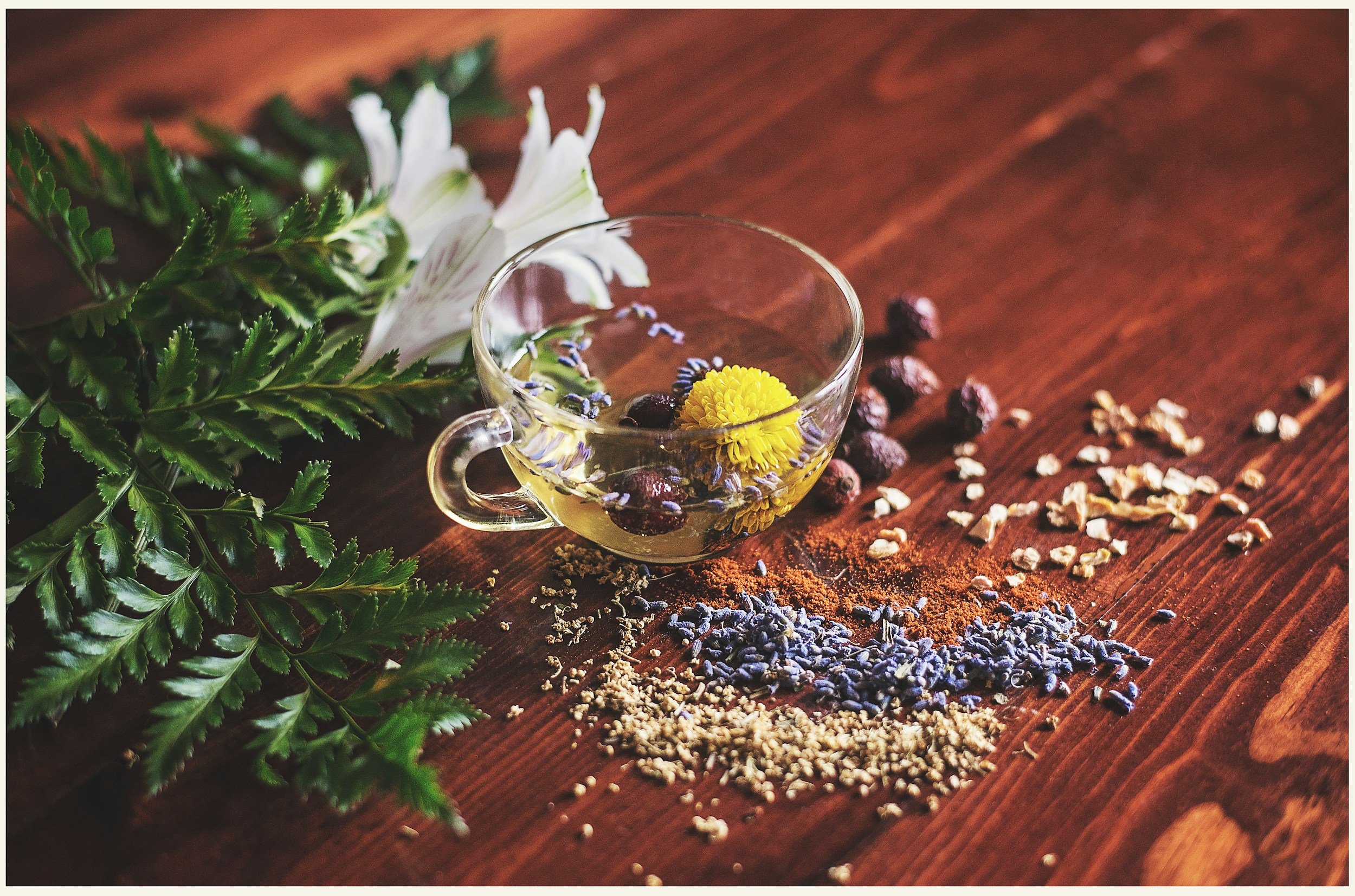
Herbal medicine and womb care round out my practice, tending to the physical vessel that holds all of this healing. The womb carries ancestral memory in the most literal, biological sense. Tending to it with herbs, warmth, and intention is an act of radical self-care in a lineage where Black women's bodies were never treated as sacred. It is also a preventative act — addressing the chronic stress, hormonal dysregulation, and embodied trauma that, left untended, become the health conditions that have moved through my family for generations.
Healing is not something that happened to me. It is something I chose — and keep choosing, every day, in small and large ways. Every time I sit with my ancestors, roll out my mat, place my hands on my womb, or speak my truth out loud, I am doing something my grandmother and mother did not have access to. I am completing the healing they could not begin. And I am making sure my daughter inherits something different — not the wounds, but the wisdom.
With love and lineage,
Allonia
