
Healing the Mother Wound Without Hating Your Mom: A Daughter's Guide
By Allonia | The Soft Hearts Society™
The struggle to heal from your mother's wounds while still loving her is one of the most complex emotional journeys a woman can navigate. The mother-daughter bond is so primal, so foundational to who we are, that acknowledging the pain she caused can feel like a betrayal—not just of her, but of yourself.
I know because I've lived it.
For years, I carried this impossible contradiction: I loved my mother deeply. And she hurt me profoundly. Both were true. Both deserved to exist. But holding both truths at the same time felt like it would split me in two.
Here's what I've learned after years of doing this work myself and holding space for thousands of daughters navigating the same path:
You don't have to hate your mother to heal from her.
In fact, hatred is often just another way we protect ourselves from feeling the grief underneath—the grief of what we needed and didn't receive.
Let me show you another way.
The Impossible Position of Daughters
There's a cruel paradox at the heart of mother wound healing:
To heal, you have to acknowledge what happened. You have to name the neglect, the criticism, the emotional unavailability, the ways you had to shrink yourself to keep her comfortable.
But the moment you start to speak these truths, you're hit with a tidal wave of:
Guilt ("She did her best")
Shame ("I'm being ungrateful")
Fear ("If I acknowledge this, I'll lose her")
Confusion ("But I love her, so how can I be angry?")
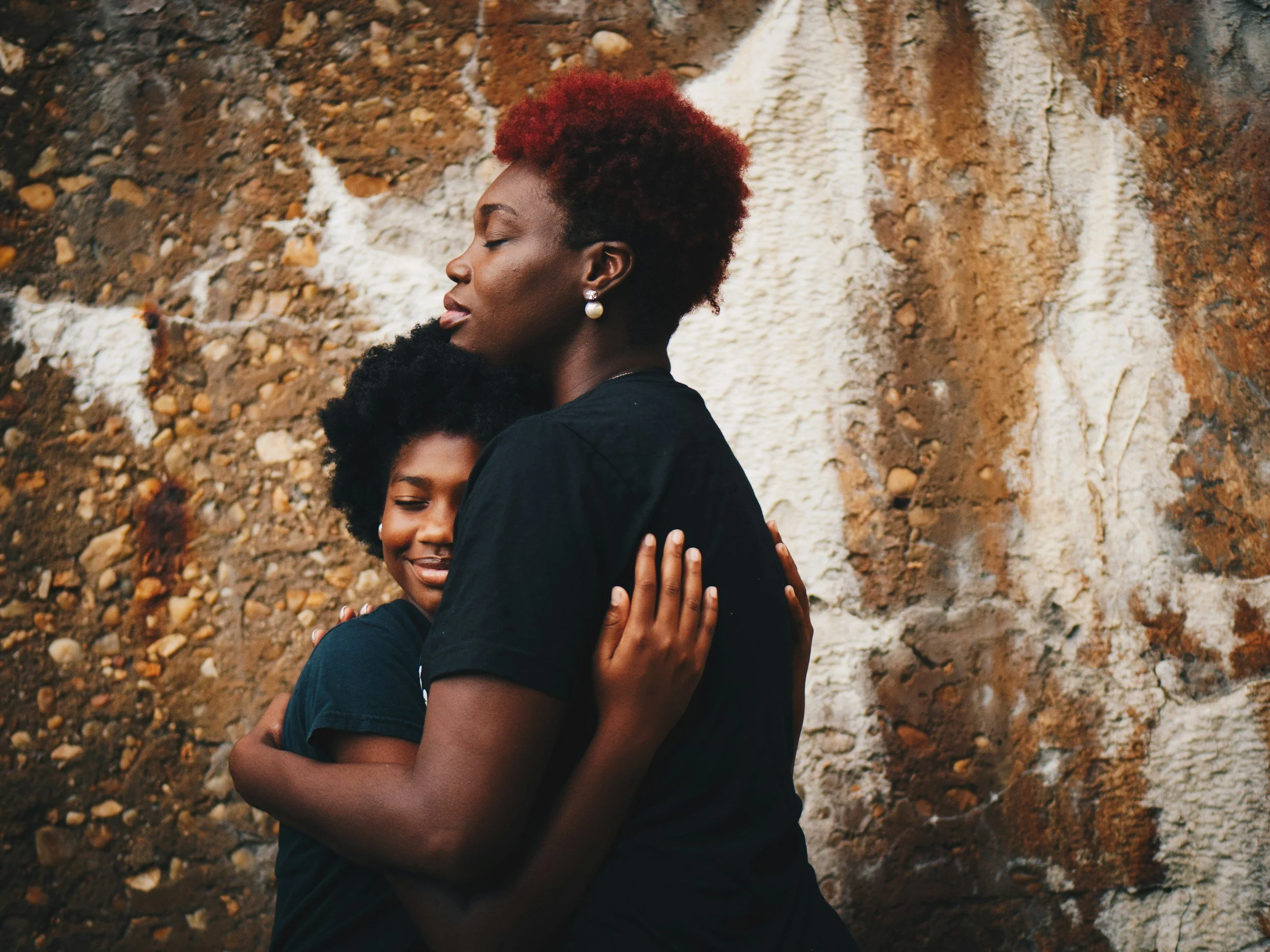
And beneath all of that? The bone-deep belief that loving your mother and acknowledging her failures are mutually exclusive.
They're not.
But no one teaches us how to hold both.
My Story: The Mother I Love and the Mother Who Wounded Me
Let me paint you a picture of my mother:
She was brilliant, creative, resilient. She survived things that would have broken most people. She worked multiple jobs to keep us afloat. She showed up in the ways she knew how.
She also:
Couldn't handle my big emotions, so I learned to suppress them.
Made me responsible for her happiness, so I became a people-pleaser
Was emotionally unpredictable, so I became hypervigilant.
Dismissed my pain as "too sensitive," so I learned to minimize my needs.
Both versions of my mother are real.
For years, I thought I had to choose: Accept her completely and deny my pain. Or acknowledge my pain and reject her completely.
The breakthrough came when I realized: I could hold her humanity and my hurt at the same time.
She was doing her best with what she had. AND her best wasn't enough for what I needed.
Both are true.
Why You Don't Have to Hate Her to Heal
Here's the truth that will set you free:
Healing the mother wound isn't about making your mother the villain. It's about releasing yourself from the role of her protector.
When you were a child, you needed your mother to survive—literally and emotionally. So when she couldn't meet your needs, you did something brilliant: you blamed yourself instead of her.
Because if it was your fault (you were too needy, too sensitive, too much), then you could fix it by being different. But if it was her fault—if she simply couldn't give you what you needed—then you were powerless. Unsafe. Unprotected.
So you made yourself wrong to keep her right. You carried the burden so she didn't have to.
That's what children do. They protect their parents at the cost of themselves.
But you're not a child anymore.
And healing means gently setting down that burden and saying: "This wasn't mine to carry."
The Five Truths That Make Healing Possible
Let me offer you five truths that allowed me to heal without hating:
Truth #1: Your mother's limitations don't erase her love. And her love doesn't erase your pain.
She can love you and still hurt you. She can have good intentions and still cause harm. She can be a good person and still be a wounded parent.
Love and harm can coexist. Acknowledging this doesn't make you disloyal—it makes you honest.
Truth #2: You can grieve what you didn't receive without demanding she acknowledge it.
The hardest lesson: You may never get the apology you deserve. She may never see what she couldn't give. She may never validate your experience.
Your healing can't wait for her recognition.
You can grieve your unmet needs, honor your inner child's pain, and validate yourself—even if she never does.
Truth #3: Forgiving her doesn't mean forgetting what happened or pretending it didn't hurt.
Forgiveness isn't about letting her off the hook. It's about releasing yourself from the prison of resentment.
You can forgive her for being limited, for being wounded herself, for doing the best she could with what she had—and still maintain boundaries. Still acknowledge the harm. Still choose differently.
Forgiveness is for you, not her.
Truth #4: She was probably wounded by her mother, too.
When you look at your mother, you're not just seeing her. You're seeing generations of unhealed mother wounds passed down like heirlooms no one wanted.
Her mother likely wounded her. And her mother before that. And on and on.
This doesn't excuse the harm. But it helps you see it in context: You're not healing from one woman's failures. You're healing from a lineage of pain.
And you? You're the one brave enough to break the cycle.
Truth #5: Loving her and protecting yourself can coexist.
You can love your mother from a distance. You can honor who she is while declining to absorb her dysfunction. You can wish her well while refusing to sacrifice yourself for her comfort.
Love doesn't require self-abandonment. Boundaries aren't rejection. Distance isn't hatred.
Sometimes, loving someone means loving them from across the room—or across the country—so you can finally love yourself up close.
Related reading: The Good Daughter Wound: Why Boundaries Feel Like Betrayal (And How to Heal)
The Practices That Helped Me Heal Without Hating
Here's what actually worked for me:
Practice 1: Separate the woman from the mother
My mother is a whole person with her own story, her own trauma, her own limitations. When I stopped seeing her only as "Mom" and started seeing her as a woman who was once a wounded daughter herself, compassion became possible.
I can have empathy for the woman. And I can acknowledge that the mother I needed wasn't the mother she could be.
Practice 2: Let yourself feel the anger first
You can't rush to forgiveness. You can't bypass the rage to get to compassion.
I had to let myself be furious first. I had to rage at the unfairness, the abandonment, the ways I had to parent myself because she couldn't.
Anger isn't the opposite of love. It's the guardian of your boundaries. Let it speak. Let it roar. Let it protect the child within you who was told her pain didn't matter.
Only after the anger had its say could I access the grief. And only after the grief could I find compassion—for her and for me.
Related reading: 8 Soft Practices for Working with Sacred Anger
Practice 3: Reparent yourself
The mother wound heals when you become the mother you needed.
Every time I:
Validate my own feelings instead of dismissing them
Meet my own needs instead of waiting for permission.
Comfort myself when I'm hurting.
Set boundaries without guilt.
...I'm healing the wound. I'm showing my inner child: "I've got you now. You're safe with me."
Related reading: 6 Practices for Reparenting Your Inner Child
Practice 4: Write the letter you'll never send
Pour it all out on paper—the pain, the anger, the longing, the grief. Everything you wish you could say but can't or won't.
Then don't send it. Burn it. Bury it. Release it.
This isn't about her. It's about you externalizing what's been festering inside.
Practice 5: Find the mothers you needed
You can't change the mother you had. But you can find maternal energy in other places:
Therapists who hold you with tenderness
Mentors who see your potential
Friends who mother you in the ways you need
Communities like The Soft Hearts Society™, where you're held without conditions
You deserved to be mothered. And if your biological mother couldn't do it, you can find that nurturing elsewhere.
Practice 6: Set boundaries based on what you need, not what she deserves
Stop trying to figure out if she "deserves" your distance or your presence. That's not the question.
The question is: What do I need to protect my peace?
Maybe that's:
Limited contact
No contact for a season (or forever)
Boundaries around certain topics
Choosing when and how you engage
Your boundaries aren't a punishment. They're an act of self-preservation.
Related reading: 8 Practices for Healing Mother Wounds
Practice 7: Let go of the fantasy mother
The hardest grief: letting go of the mother you wish you'd had.
Not the mother she was. The mother you needed her to be. The mother who would have seen you, celebrated you, protected you, chosen you.
That mother doesn't exist. And holding onto that fantasy keeps you from healing.
Grieve her. Mourn what could have been. And then release her so you can see what actually is.
What Healing Actually Looks Like
Here's what I want you to know about healing the mother wound:
It's not linear. Some days you'll feel compassion. Other days you'll feel rage. Some days you'll miss her desperately. Other days you'll want nothing to do with her.
All of it is valid. All of it is part of the process.
Healing doesn't mean:
Never feeling angry anymore.
Having a perfect relationship with her
Forgetting what happened
Pretending it didn't hurt

Healing means:
You can hold complexity (she hurt you, AND you love her)
You're no longer waiting for her to change for you to be okay.
Your peace isn't dependent on her validation.
You can protect yourself without guilt.
You've stopped sacrificing yourself to keep her comfortable.
The Permission You're Waiting For
If you're reading this hoping for permission to feel what you feel, here it is:
You're allowed to love her and be hurt by her.
You're allowed to have compassion for her story and still protect yourself.
You're allowed to grieve the mother you needed, even if she tried her best.
You're allowed to set boundaries, to limit contact, to choose yourself—without being a bad daughter.
You're allowed to heal, even if she never acknowledges what she did.
You don't need her permission. You don't need her understanding. You don't even need her to change.
You just need to give yourself what she couldn't: unconditional love, deep compassion, and the unwavering belief that you are worthy—exactly as you are.
A Letter to the Daughter Still Protecting Her Mother
Dear one,
I see you. I see how hard you're trying to hold it all together—to honor your mother while also honoring your pain. To be a good daughter while also being honest about what happened.
It's exhausting, isn't it? Performing the gratitude. Minimizing the hurt. Protecting her from your truth.
But here's what I need you to hear:
You can stop now.
You can stop making yourself smaller to make her feel bigger. You can stop performing the role of the perfect daughter to earn the love that should have been freely given.
You can love her. And you can tell the truth about what it cost you to be her daughter.
Both can be true.
And the moment you allow both to be true, you'll finally be free.
You're Not Alone in This
If healing the mother wound while still loving your mother feels impossible, I want you to know: thousands of women are walking this same path.
Inside The Soft Hearts Society™, we hold space for exactly this complexity—the grief, the anger, the love, the longing, all of it.
You don't have to figure this out alone.
If this resonates with you, I want you to know you're not alone.
Join The Soft Hearts Society™
Inside our sacred membership, you'll find:
A community of daughters healing their mother wounds without shame or judgment
Monthly workshops on mother wound healing, boundaries, and reparenting.
Safe space to name what happened without performing gratitude
Guided practices for holding complexity and healing in layers
Support from women who understand exactly what this journey feels like
Learn more about The Soft Hearts Society™
One Last Thing
You're not a bad daughter for acknowledging the wound.
You're a brave woman who's choosing to heal so the cycle stops with you.
Your future children—biological or otherwise—won't have to carry what you're releasing.
And that? That's the most loving thing you could ever do.
How is your relationship with your mother? What's helping you heal the mother wound? I'd love to hear your story—leave a comment below or connect with me on Instagram @alloniarose.
The Healing Continues...
Connect With Me:
🎙️ Free Weekly Circles on Insight Timer - Join our Sacred Sisterhood: Soft Living community
📺 YouTube Channel - Weekly wisdom on healing, boundaries, and soft living
📌 Pinterest - Daily inspiration for your healing journey
Ready to Go Deeper?
The Soft Hearts Society™ is where this work lives. Weekly livestreams. Monthly Womb Reiki sessions. A community of women breaking cycles together.
We move through the Lineage Liberation Method™—Witnessing what was passed down, Releasing what your body's been holding, and Remembering who you've always been.
You don't have to do this alone.
Or start with our Free Gentle Release Workbook →
You are already whole. You just forgot. Let's remember together. 🌹
Save this post to come back to whenever you need a reminder that you can love her and heal from her at the same time.

