
How I Feel Connected to My Ancestors
My connection to my ancestors is not something I have to search for or reach toward. It is something I live inside of every single day. It is present when I wake up and sit at my altar before the rest of the world has stirred. It is present when I pour water and call their names. It is present when I move through my day and feel a knowing rise up in me that I did not arrive at through logic — a pull, a warning, a gentle push in the right direction that I have learned, over time, to trust completely.
I feel my ancestors in both directions at once — in the wound and in the wisdom. The wounded ones come forward, and I recognize them. I feel my grandmother's unspoken grief in my own body when I am tempted to go silent. I feel my mother's hypervigilance when my nervous system braces for something that is no longer coming. These are not hauntings. They are invitations — moments where the unfinished work of a lineage rises to the surface and asks: will you be the one to finally tend to this? And I have said yes. Over and over, I have said yes.
But I also feel the strong ones. The ones who survived the Middle Passage, who worked the land with broken hands and still sang, who kept something sacred alive inside of them when everything outside was trying to extinguish it. I feel them most when I am in my practice — when I am in the Reiki space, when I open my mouth to speak truth in a healing circle, when I hold my daughter and tell her she is loved. In those moments, something ancient moves through me. A recognition. A continuity. As though every woman in my lineage who could not do this exhales through me when I do.
This connection is not metaphor. It is not spiritual performance. It is the most real relationship in my life — one that has taken years of intentional cultivation, of learning to listen in ways that have nothing to do with the ears, of being willing to sit with what is uncomfortable and ask what it is trying to tell me. My ancestors are not behind me. They are with me.
Practices of Ancestral Veneration & How I Incorporate Them
Ancestral veneration is not a practice I am beginning — it is a practice I am already living, one that has grown deeper and more intentional over time. What resonates most profoundly is that veneration is not about worship in the passive sense. It is about an active, reciprocal relationship. My ancestors need my attention, my acknowledgment, my voice. And I need their guidance, protection, and the accumulated wisdom of every life they lived before mine.
The Altar as Sacred Anchor
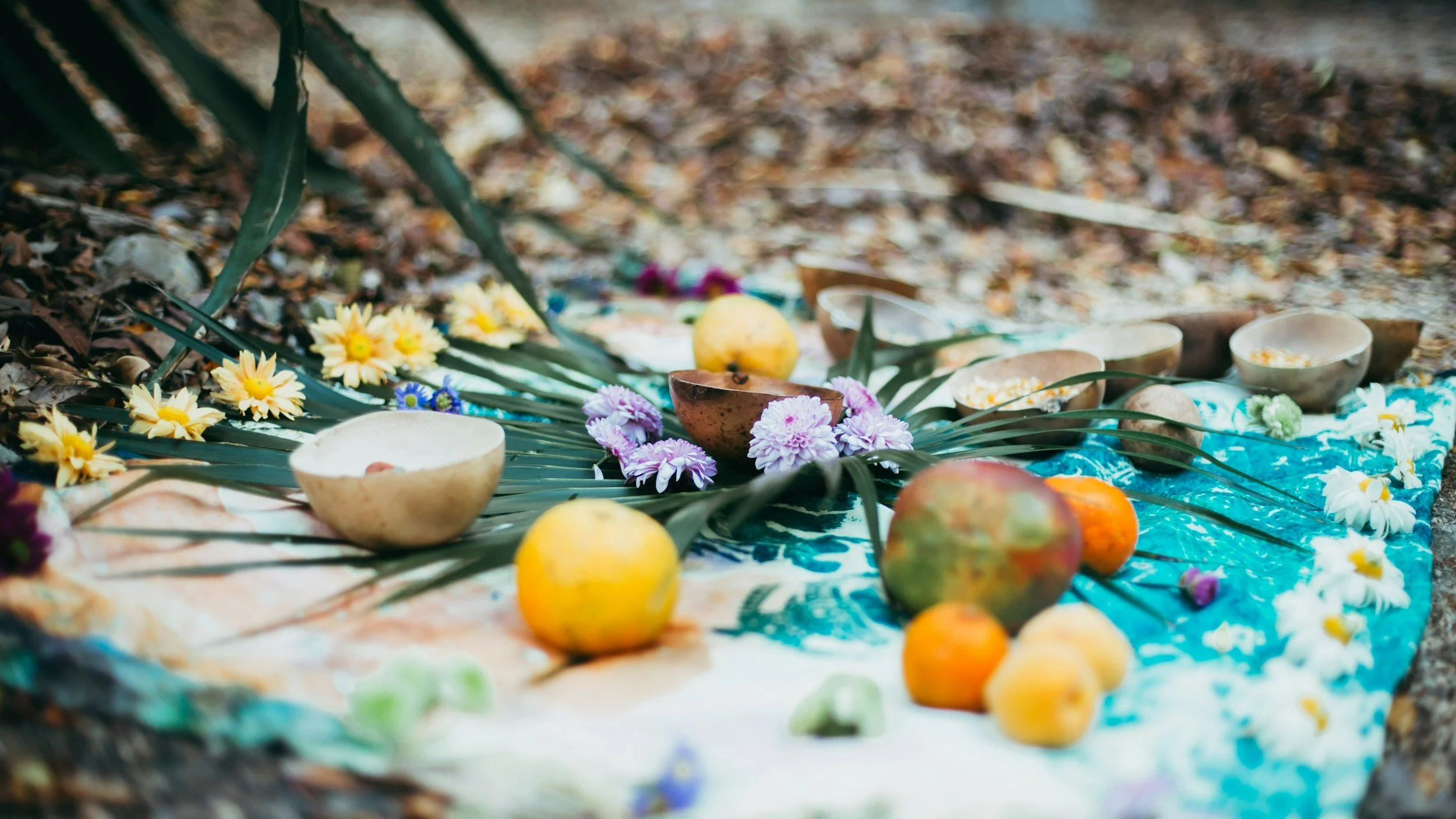
My established ancestor altar is the physical center of this practice. It is not decoration. It is a living space — a place where the veil between the worlds is intentionally thinned and maintained. Water sits on my altar always, because water is a conductor, a carrier of spirit, an element my ancestors can move through and communicate across. I refresh it regularly, understanding that stagnant water becomes a barrier rather than a bridge. Candles hold the light that says: I see you. I have not forgotten you. Food offerings — whatever I am eating, whatever would have nourished them — are placed there in recognition that the relationship is mutual. I feed them. They sustain me.
Prayer & Spoken Communication
I speak to my ancestors out loud. This is perhaps the most important practice I have — because my lineage is full of women who went silent, who swallowed their truth, who communicated through violence or withdrawal because direct, honest speech was not safe. Every time I open my mouth at my altar and speak plainly — about what I need, what I am grateful for, what I am struggling with, what I am releasing — I am doing something my grandmother and mother could not do. I am modeling for my lineage what communication in safety looks like. That modeling moves in both directions: forward to my daughter, and backward to the ones who never had it.
Libations
Pouring libations is an act I carry with full understanding of its weight. When I pour and call names — known and unknown, remembered and forgotten — I am refusing the erasure that was done to my people. Slavery stripped names. Colonial violence stripped languages. Silence stripped stories. Every libation I pour is an act of restoration, a declaration that the unnamed are not forgotten, that the ones whose stories were never told are still held, still honored, still part of the living fabric of this lineage.
How Ancestral Relationship Addresses Generational Trauma & Provides Guidance
The most transformative shift in my healing journey came when I stopped seeing my ancestors as the source of my wounds and began seeing them as partners in healing those wounds. Both things are true: they passed down pain, and they want to help me end it. These are not contradictions. They are the full picture of what it means to love imperfectly across generations.
Completing What Was Left Unfinished
Generational trauma, at its core, is unfinished business. It is grief that was never grieved, rage that was never metabolized, violation that was never witnessed, love that was never expressed. My grandmother died with all of her secrets. My mother passed away with hers. When I sit at my altar and speak their stories out loud — when I say what happened, when I name the abuse and the alcohol and the hunger and the violence — I am completing something they could not complete themselves. I am giving voice to the unspoken, and in doing so, I am releasing it from the body of the lineage. That release is not just spiritual. It is somatic, neurological, epigenetic. The science of intergenerational trauma transmission tells us that what is not resolved is encoded. My practice is about interrupting that encoding at the spiritual level, which is where it lives before it becomes biology.
Accessing the Wisdom Behind the Wound
Every wound in my lineage came from somewhere. My grandmother's coping mechanisms were not weakness — it was the only anesthesia available to a Black woman in the rural South who had survived rape, infant death, poverty, and racism with no language, no therapy, no safe space to fall apart. When I approach her through my altar with that understanding, something shifts. I am not asking her to account for the harm. I am asking her to help me understand what she survived, so that I can carry the strength of that survival without carrying the survival strategy itself. There is a difference between inheriting someone's coping mechanism and inheriting their resilience. My ancestral practice teaches me to take the latter and consciously release the former.
Protection as Presence
There is a protection that comes from a well-tended ancestral relationship that I have felt in ways I cannot fully explain and do not need to. I have walked away from situations that should have harmed me and did not. I have found doors open when they should have been closed, and closed when they needed to be. I have felt, in moments of real danger, a presence around me that steadied my nervous system and gave me clarity when panic would have been the expected response. This is not luck. This is what it means to have an active, reciprocal relationship with the ones who came before — they are invested in my survival because my survival is the continuation of everything they endured to bring me here. They did not go through what they went through for this lineage to end in silence and shame. They went through it so that I could stand here, healed and healing, and declare that the cycle is turning.
Building a relationship with my ancestors has not made my healing easier. It has made it possible. It has given me a container large enough to hold the full weight of what my lineage has carried — and the spiritual backing to put some of it down.
Continue gently
If you want a place to notice the beliefs you inherited, begin with the free Break the Cycle five-day journal:
With love and lineage,
Allonia
